
Delayed Ejaculation Treatment in Kasara
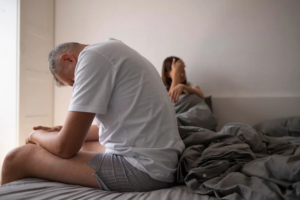
Physical and Psychological Factors That May Contribute
Physical: Diabetic neuropathy, hypothyroidism, low testosterone, prostate conditions, post-surgical nerve damage, and age-related changes in nerve conduction.
Psychological: Performance anxiety, relationship tension, depression, guilt or negative beliefs about sex, and pornography-conditioned arousal styles that make real-life stimulation feel insufficient by comparison.
In many men, what began as a physical slowing has been compounded by anxiety about the delay itself — creating a cycle that needs both medical and psychological intervention.
How Medications and Health Conditions Affect Ejaculation
Medication-induced DE is extremely common and extremely underdiagnosed.
| Medication / Condition | Effect on Ejaculation |
| SSRIs / SNRIs (antidepressants) | Most common drug cause — directly inhibits ejaculatory reflex |
| Antipsychotics | Block dopamine receptors involved in sexual response |
| Alpha-blockers (blood pressure / prostate) | Interfere with sympathetic nerve signalling for emission |
| Diabetes | Peripheral neuropathy damages ejaculatory nerve pathway |
| Hypothyroidism | Slows neurological and metabolic function including sexual response |
| Chronic alcohol use | Depresses CNS; raises ejaculatory threshold over time |
Men taking antidepressants who develop DE should not stop medication without guidance. Dose timing, medication switching, or adjunctive treatment can address DE without discontinuing a necessary prescription.
Why Delayed Ejaculation Is Often Misunderstood
Delayed ejaculation is frequently trivialised and almost never properly understood — even by the men experiencing it. The assumption that taking longer to ejaculate is simply a bonus ignores the reality: for men who genuinely cannot reach climax despite sustained arousal, the experience is frustrating, physically exhausting, and quietly damaging to intimacy.
Delayed ejaculation (DE) is a recognised medical condition — and one of the least commonly discussed male sexual health concerns. Men suffering from it often go years without a name for what they are experiencing, let alone treatment
Understanding the Ejaculation Process
Ejaculation has two phases: emission (semen moves into the urethra) and expulsion (rhythmic contractions propel it outward). Both require coordinated input from the nervous system and brain. When the stimulation threshold for this reflex is abnormally high — due to nerve disruption, hormonal factors, psychological inhibition, or medication effects — ejaculation is delayed or absent entirely.
Critically, a man with DE may have normal desire and a firm erection and still be unable to climax. This is what makes it clinically distinct from erectile dysfunction or low libido.
When Is Delayed Ejaculation a Medical Concern?
| Presentation | Clinical Significance | Action |
| Occasionally taking longer | Normal variation | No action unless distressing |
| Consistently 30+ minutes required | Warrants evaluation | Consult a specialist |
| Can ejaculate alone but not during sex | Situational DE — often psychological | Psychosexual evaluation |
| Cannot ejaculate in any situation | Generalised DE — often medical | Full medical and hormonal assessment |
| Sudden onset after previously normal function | Acquired DE — investigate medications/health changes | Prompt evaluation |
Impact on Relationships, Fertility, and Emotional Well-being
Partners often misread DE as disinterest or deliberate withholding — creating emotional distance that worsens the condition. For couples trying to conceive, DE is a direct practical barrier to natural conception, adding pressure that further inhibits ejaculation. Emotionally, men with DE frequently begin avoiding sex entirely — not from low desire, but because the process has become exhausting and anxiety-laden.
Medical Evaluation and Diagnostic Approach
Dr. Pathak’s evaluation includes:
- Full sexual and medical history — onset, situational vs generalised, relationship context
- Complete medication review — with particular attention to antidepressants and prostate medications
- Hormonal blood panel — testosterone, thyroid function, prolactin, blood glucose
- Psychological screening — for depression, anxiety, and performance pressure
- Masturbation pattern assessment — an underutilised but clinically important factor in situational DE
Personalised Treatment Based on Underlying Cause
| Contributing Factor | Treatment Approach |
| SSRI-induced DE | Dose adjustment, timing change, or medication switch |
| Hypothyroidism | Thyroid management; DE often resolves with treatment |
| Low testosterone | Testosterone optimisation with monitoring |
| Idiosyncratic masturbation pattern | Graduated behavioural retraining programme |
| Performance anxiety | CBT, mindfulness, sensate focus exercises |
| Relationship inhibition | Psychosexual counselling; partner involvement where appropriate |
| Post-surgical nerve damage | Pelvic floor physiotherapy; realistic expectation setting |
Why Patients from Kasara Choose Our Nashik Clinic
Kasara is approximately 120–130 km from Nashik via Kasara Ghat and State Highway 35 through Igatpuri — roughly a 2 to 2.5 hour journey. Most patients travel in the morning, attend their consultation, and return the same day.
For men in Kasara, specialist sexual health care simply is not available locally. Nashik offers what the region cannot: a dedicated sexual health specialist, proper diagnostic infrastructure, and a consultation environment where privacy is guaranteed. Many patients need only one in-person visit — follow-up is available via teleconsultation.
Also serving: Igatpuri, Ghoti, Shahapur, Khardi, and surrounding Shahapur-Thane region.
Practical Lifestyle Changes That Support Recovery
- Reduce masturbation frequency and vary technique — recalibrates ejaculatory threshold toward partnered stimulation
- Limit alcohol before sex — directly raises ejaculatory threshold
- Manage blood sugar — slows neuropathy progression in diabetic men
- Reduce performance focus — sensate focus exercises break the pressure cycle
- Cardiovascular exercise — supports nerve health, circulation, and testosterone
- Open partner communication — reframing sex away from climax as the only goal often allows it to occur more naturally
